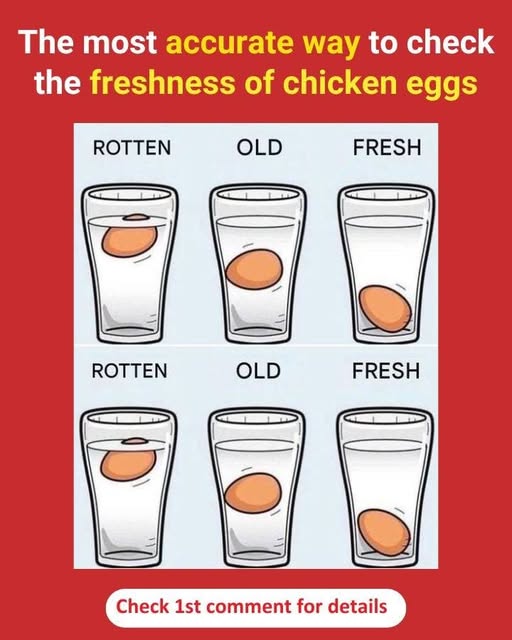
- Fill a Bowl with Water: Use a clear bowl and cold tap water.
- Place the Egg Gently: Lower it into the water carefully.
- Observe the Position: Check how the egg behaves to determine freshness.
This method is fast, easy, and requires no fancy tools—perfect for everyday cooking.
Extra Tips for Egg Storage and Safety
- Refrigerate: Keep eggs in the fridge to prolong freshness.
- Avoid Washing: Washing can remove the natural protective coating, speeding up spoilage.
- Check for Cracks: Discard eggs with cracks, as bacteria can enter through damaged shells.
Following these practices ensures your eggs stay fresh longer and safe to eat.
Embracing Time-Tested Kitchen Wisdom
Nana’s egg test isn’t just a trick—it’s a reminder that traditional knowledge still has a place in modern kitchens. In an era dominated by smart gadgets, sometimes the simplest methods are the most reliable.
Next time you’re unsure about an egg’s freshness, just remember Nana’s advice: fill a bowl with water and let science do the rest.
Conclusion
What makes this test so enduring is its simplicity and effectiveness. No gadgets, no guesswork—just water and a little common sense.
It’s useful for anyone: home cooks, students, teachers, and even professional chefs. Plus, it helps reduce waste by letting you confidently use eggs that are still good, rather than tossing them unnecessarily.
A small habit, a big difference—sometimes the smartest kitchen tools are the ones that have been around for generations.