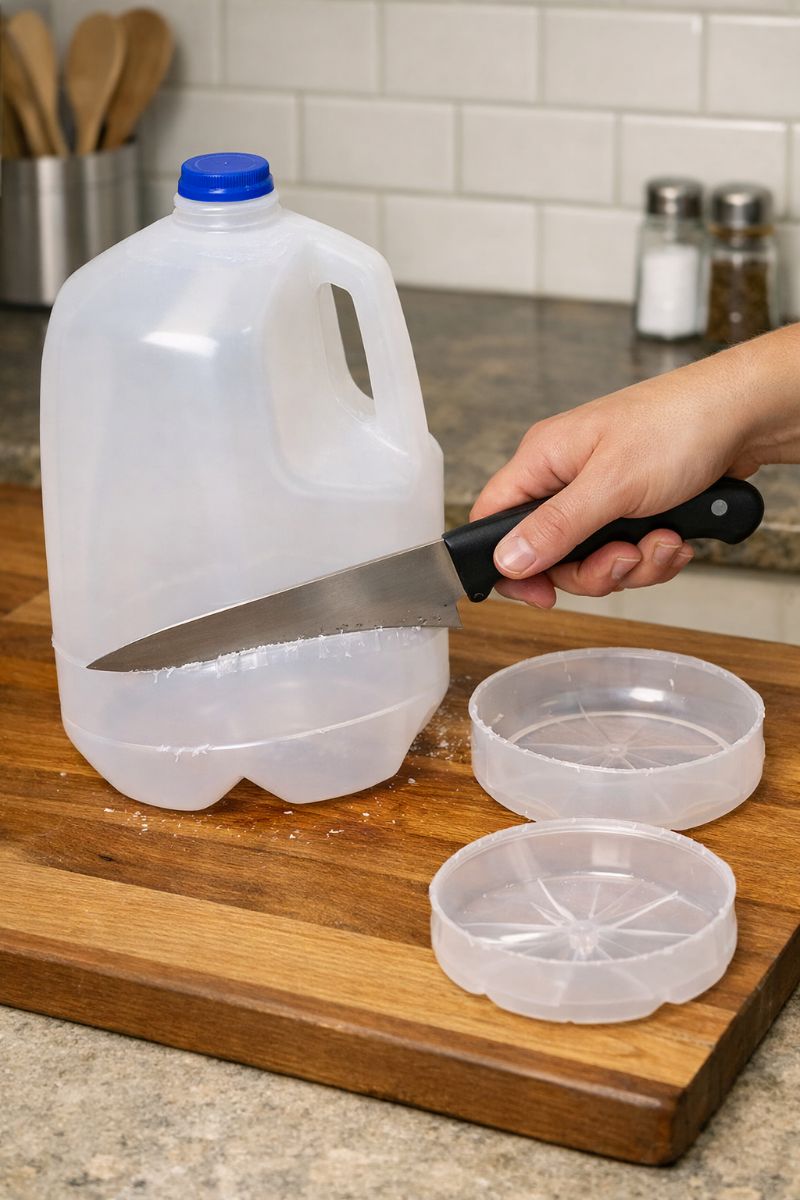
Using a utility knife or sharp scissors, carefully slice off the bottom 3 to 4 inches of each milk jug. Ensure the cut is straight for stability.
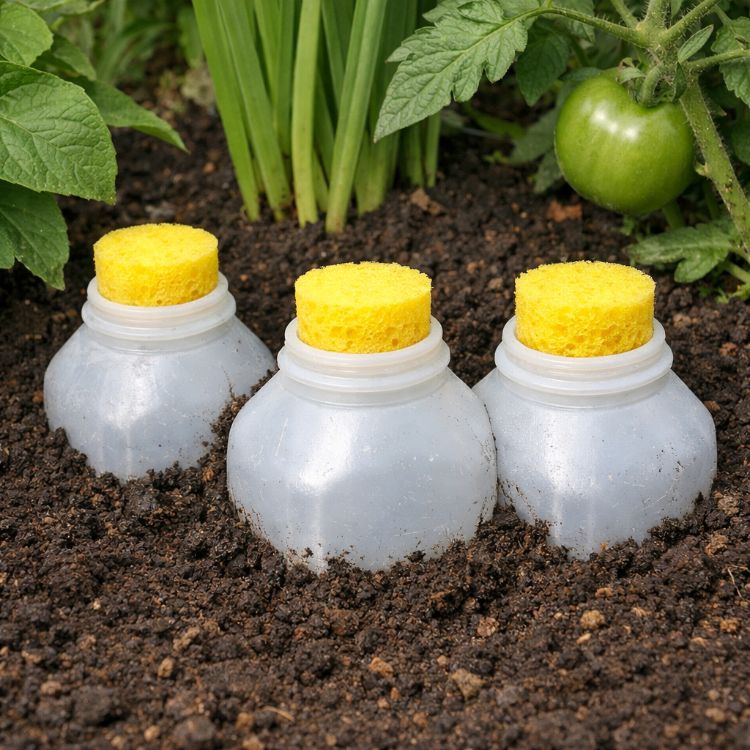
Take a household sponge and cut it to fit snugly inside the neck of each milk jug. This will act as a water filter and prevent soil from entering the jug.
Dig a hole next to the plant that needs watering. The hole should be deep enough to bury the jug so that only the top portion is visible above the soil.
Place the jug, neck down with the sponge inside, into the hole. Backfill the hole with soil to secure the jug in place.
Fill the top of the jug with water as needed. The water will slowly seep through the sponge and into the soil, directly hydrating the plant's roots.
For a more tailored watering approach, consider using colored sponges or marking the jugs with plant names or watering schedules. You can also experiment with different sponge densities to control the water flow rate. For larger plants, use a similar method with larger plastic containers. Additionally, adding a small amount of fertilizer to the water can provide nutrients directly to the roots.